Best Mobile Data Options for Japan Tourists in 2026
7/12/2026
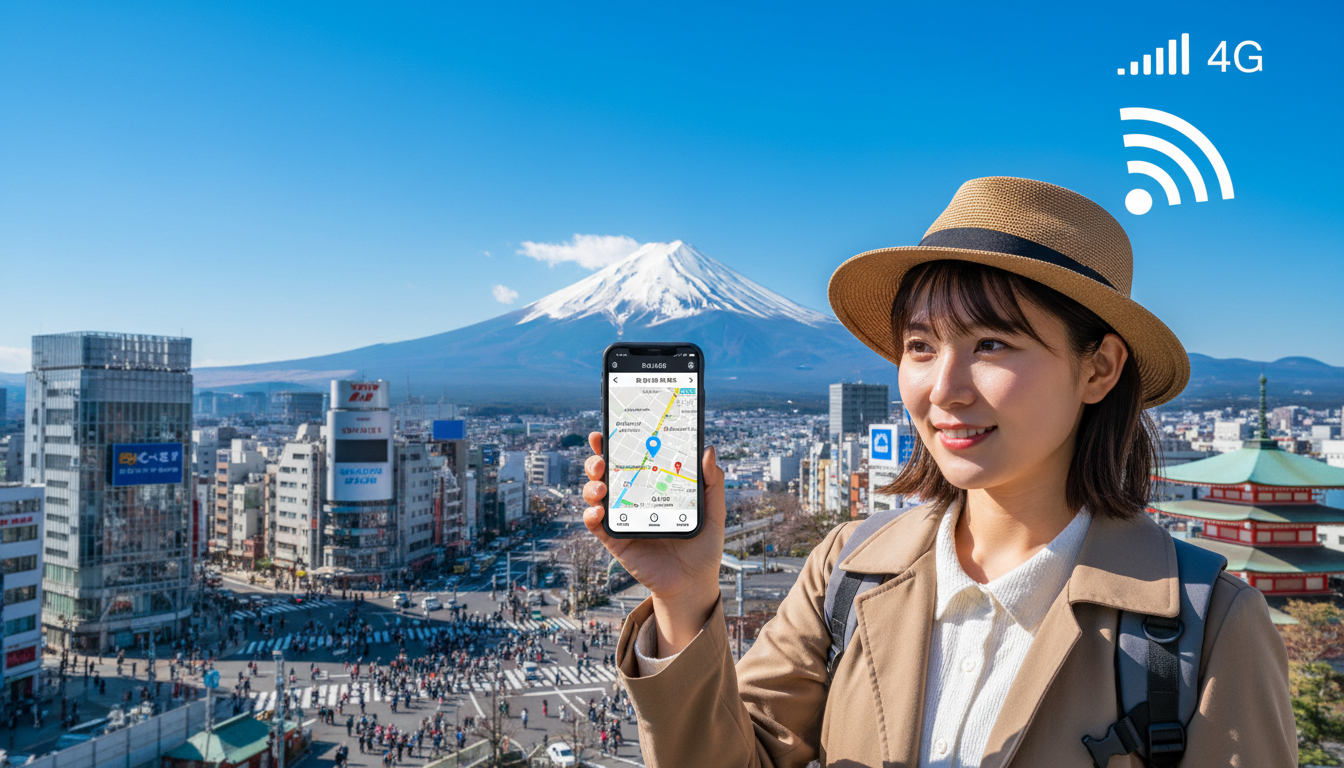
In short, what you'll discover in this article: Explore the best mobile data options for tourists visiting Japan, including eSIMs, prepaid SIM cards, and pocket Wi-Fi. Learn how to choose the right plan based on your trip length and needs, plus practical tips for buying and activating your connection hassle-free.
1. Quick Summary: Which Option to Choose for a Tourist in Japan
For most tourists, the easiest and most flexible choice is the prepaid eSIM, offering instant activation and no physical card needed. If you prefer sharing data among multiple devices or travelers, pocket Wi-Fi is ideal.
For longer stays or those who want a physical SIM, a prepaid Japanese mobile data SIM card for tourists is a solid option.
2. Overview of Available Mobile Data Options
Japan offers several ways to stay connected without roaming fees:
2.1 eSIM: Presentation, Advantages, Disadvantages
An eSIM is a digital SIM embedded in your smartphone that allows you to download mobile data plans without swapping physical cards. It’s perfect for travelers who want quick setup and flexibility.
Advantages:
- Instant activation before or upon arrival.
- No need to handle physical SIM cards.
- Easy to switch between plans or providers.
- Often cheaper than roaming or pocket Wi-Fi rental.
Disadvantages:
- Requires a compatible phone (most newer models support eSIM).
- Some providers may limit voice call options.
- Activation steps can be confusing for first-timers.
2.2 Prepaid Physical SIM Card: Where to Buy, Activation, Duration
A prepaid mobile data SIM for Japan visitors is a traditional plastic SIM card loaded with data valid for a set period.
Where to buy:
- Airport counters at major international airports.
- Electronics stores and convenience stores in cities.
- Online vendors offering delivery to your home or hotel.
Activation:
- Usually straightforward; insert the SIM and follow provider instructions.
- May require manual APN settings on some phones.
Duration:
- Plans typically range from 7 to 30 days.
- Data-only plans are common; voice calls often not included.
2.3 Pocket Wi‑Fi: When to Prefer, Capacity, Price
Pocket Wi-Fi devices are portable routers that provide internet access via cellular networks to multiple devices simultaneously.
When to prefer:
- Traveling in groups or families needing shared internet.
- Using multiple devices like laptops and tablets.
- Areas with good cellular coverage where device rental is convenient.
Capacity & Price:
- Daily rental fees vary; unlimited data options exist but can be pricier than SIMs.
- Battery life usually lasts a full day but requires charging.
3. How to Choose According to Your Profile
3.1 Short Stays (1–7 Days)
For brief trips, an eSIM with a small data package or a prepaid SIM bought at the airport offers convenience and cost-efficiency.
3.2 Medium Stays (8–30 Days)
Consider prepaid SIM cards with larger data allowances or pocket Wi-Fi if traveling with others. eSIMs with monthly plans also provide flexibility.
3.3 Long Stays / Temporary Expatriation
Longer visits benefit from prepaid SIMs with extended validity or local contracts if available. Pocket Wi-Fi may be less practical long-term due to rental costs.
3.4 Families and Groups
Pocket Wi-Fi devices excel here by enabling multiple connections on one device, reducing overall costs and simplifying management.
4. Practical Guide to Buying and Activation
4.1 Buying Before Departure (Advantages, Recommended Providers)
Purchasing an eSIM before your trip ensures immediate connectivity upon landing without searching for physical stores. Providers like eSIM.dog, MicroEsim, and LinkeSIM offer competitive plans with instant activation.
Using promo codes such as MYBESTSIM can provide discounts on unlimited plans from top providers like Orange Travel and Saily.
4.2 Buying Upon Arrival (Airports, Shops, Stations)
Major airports in Tokyo, Osaka, and other cities have counters selling prepaid SIM cards and pocket Wi-Fi rentals. Convenience stores also stock SIM cards but may have limited options.
4.3 Activation Steps for eSIM and Physical SIM (Step-by-Step)
-
For eSIM:
- Purchase online or at airport kiosks.
- Scan QR code provided by the vendor.
- Follow phone prompts to install the profile.
- Configure APN settings if necessary.
-
For Physical SIM:
- Insert the SIM into your phone.
- Restart the device.
- Adjust APN settings if automatic configuration fails.
- Start using mobile data immediately.
5. Coverage, Speed, and Technical Restrictions
5.1 Phone Compatibility (Bands, Locked Operators)
Ensure your phone supports Japanese cellular bands (especially LTE Band 19) and is unlocked from your home carrier. Most modern smartphones support these bands; check compatibility before purchasing any plan.
5.2 4G/5G Coverage in Cities vs Rural Areas
Urban centers like Tokyo, Osaka, and Kyoto enjoy robust 4G/5G coverage with fast speeds suitable for streaming and navigation. Rural regions may have spotty coverage; pocket Wi-Fi devices relying on major carriers like NTT Docomo provide better rural access.
6. Tips to Save Money and Avoid Issues
6.1 Promo Codes, Rental vs Purchase, Data Sharing
Use verified promo codes such as MYBESTSIM when buying from providers like LinkeSIM or Airalo for discounts on unlimited data plans. Renting pocket Wi-Fi can be costlier than buying a prepaid SIM or eSIM if traveling solo but beneficial for groups due to shared data usage.
6.2 Security and Privacy (Public Networks, Recommended VPNs)
Avoid connecting to unsecured public Wi-Fi networks in Japan without protection. Use trusted VPN services to encrypt your connection when accessing sensitive information or banking apps while traveling.
7. Conclusion and Final Recommendations
Choosing the best mobile data option in Japan depends on your trip length and connectivity needs. For most tourists seeking convenience and flexibility, the prepaid eSIM stands out as the top choice—especially when purchased ahead of time with discount codes from reliable providers listed on MyBestSim.
Families or groups should consider pocket Wi-Fi for shared access, while longer stays might benefit from physical prepaid SIM cards or local contracts if available.
Prepare your mobile data plan before departure to enjoy seamless internet access throughout your Japanese adventure without roaming fees or surprises!
For detailed comparisons of Japan eSIM plans and activation instructions, check out our guides on Japan eSIM Plan and How To Get eSIM In Japan.
FAQ
What is the easiest mobile data option for tourists in Japan?
The prepaid eSIM is the easiest option for most tourists, offering instant activation without needing a physical SIM card. It provides flexibility and convenience, especially when purchased before arrival.
When should I choose pocket Wi-Fi over a SIM card in Japan?
Pocket Wi-Fi is ideal for groups or families who want to share internet across multiple devices. It’s also useful if you need to connect laptops or tablets and prefer a single device for all your data needs.
How can I activate a prepaid physical SIM card in Japan?
To activate a prepaid SIM, insert it into your phone, restart the device, and follow any provider instructions. You may need to manually set APN settings if automatic configuration doesn’t work.
Are there any phone compatibility issues with Japanese mobile data plans?
Yes, your phone must support Japanese cellular bands, especially LTE Band 19, and be unlocked from your home carrier. Most modern smartphones meet these requirements, but it’s important to check before purchasing.
Can I buy and activate an eSIM before arriving in Japan?
Yes, buying an eSIM before departure allows immediate connectivity upon landing. Many providers offer instant activation via QR codes, making it hassle-free to start using mobile data as soon as you arrive.

Sakura Tanaka
Sakura is a Japan travel writer. At Japan eSIM she compares NTT Docomo, SoftBank and au plans for visitors exploring Tokyo, Kyoto and beyond.