2 eSIM iPhone Cost Guide for Traveling in Japan 2026
9/25/2026
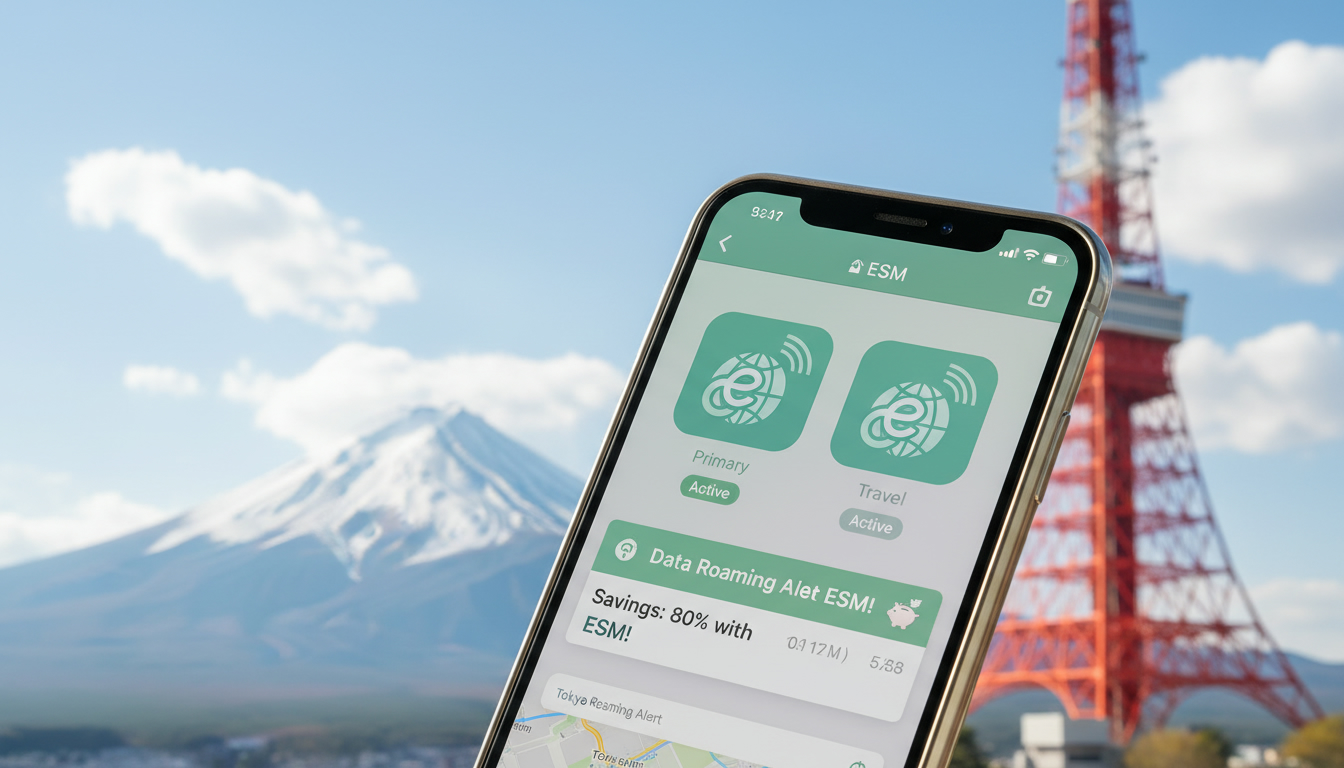
Understanding the Cost of Using Two eSIMs on an iPhone While Traveling in Japan
Using two eSIMs on an iPhone can be a smart way to manage personal and work numbers or to combine local and international plans while traveling. However, the budget implications of activating and using dual eSIMs are often unclear, especially when roaming abroad in Japan.
The main costs you should expect include the price of each eSIM data plan, potential roaming fees if you don’t manage your connections properly, and any carrier-specific charges. I always start by clarifying which iPhone models support dual eSIMs and how that affects your expenses, because not all models handle two active eSIMs simultaneously without a physical SIM.
Which iPhones Support Two eSIMs and What It Means for Your Budget
Since the iPhone 13 series, Apple introduced support for dual eSIM functionality without requiring a physical SIM card. This means you can have two active eSIM profiles on one device at the same time.
Models like the iPhone SE (3rd generation), iPhone 13, 14, and later allow this feature. The key difference is that earlier models either required one physical SIM plus one eSIM or could only store multiple eSIMs but activate only one at a time.
The Cost Impact of Choosing Dual eSIM-Compatible iPhones
- No need for physical SIM cards: This eliminates the cost of purchasing physical SIM cards or paying activation fees for them.
- Flexibility in carrier choice: You can pick local Japanese carriers offering competitive short-term data plans alongside your home carrier’s plan.
- Potential savings on roaming: By activating a local Japanese eSIM, you avoid expensive roaming fees that your home carrier might charge.
However, having two active eSIMs means you must manage which line is used for data to prevent unexpected charges. For example, if your primary line is set to roam in Japan without a local plan active, you risk high roaming fees.
What You Pay For When Using Two eSIMs on an iPhone in Japan
The main costs break down into three categories:
| Cost Type | Description | Notes |
|---|---|---|
| eSIM Data Plans | Price of purchasing data packages from Japanese providers like NTT Docomo or SoftBank | Plans vary from 1-day to 30-day durations; prices start around $1.11 for 1-day plans |
| Activation Fees | Usually included in the plan price; some providers may charge a small setup fee | Most Japanese eSIM providers include activation in the plan cost |
| Roaming Charges | Fees charged by your home carrier if you use their network abroad without local eSIM | Can be avoided by disabling data roaming or prioritizing the local Japanese eSIM |
Examples of Japanese eSIM Data Plan Prices
Using MyBestSim’s comparison as a reference, here are some typical prices for short-term data plans suitable for travelers:
- 1-day 3GB plan from eSIM.dog at approximately $1.11
- 7-day 3GB plan from MicroEsim at about $2.54
- 30-day 3GB plan from Yatelo priced near $2.97
These prices highlight how affordable local data plans can be compared to roaming fees from foreign carriers.
How to Avoid Extra Charges When Managing Two eSIMs on Your iPhone
Managing two active lines requires careful settings adjustment to prevent unexpected costs:
Setting Up Dual eSIM on an iPhone Without Extra Fees
- Assign one line as primary for calls and messages: This is usually your personal or work number.
- Set the second line specifically for data usage: For example, use your Japanese local eSIM exclusively for mobile data.
- Disable data roaming on your home carrier’s line: This prevents automatic switching to expensive roaming networks.
- Manually select which line to use for cellular data: The iPhone allows switching between lines in Settings > Cellular > Cellular Data.
A common mistake is leaving both lines set to allow data roaming or not specifying which line handles data traffic. This leads to the mechanism where your phone uses whichever network has better signal strength by default, potentially incurring costly roaming charges.
Field Observation: If you fail to disable data roaming on your home carrier’s line while using a Japanese local eSIM for calls only, you risk high roaming fees because the phone may still route background app data through the home carrier’s network.
Advantages and Budget Benefits of Using Two eSIMs on an iPhone While Traveling
Using two eSIMs simultaneously offers several financial advantages if managed correctly:
- Cost control: You pay only for local data usage with affordable Japanese plans while keeping your home number active without roaming costs.
- Seamless switching: No need to physically swap SIM cards or buy multiple devices.
- Dual phone numbers: Manage work and personal calls separately without carrying two phones.
I’d advise against relying solely on your home carrier’s roaming plan when traveling in Japan because even short-term usage can lead to unexpectedly high bills. Instead, activating a local Japanese eSIM alongside your home number saves money and hassle.
Practical Tips for Managing Two Phone Numbers with Dual eSIMs on Your iPhone
Switching Between Two Active Lines Without Interruptions
The latest iPhones with dual eSIM support allow both lines to be active simultaneously but only one can be used for cellular data at a time. To switch:
- Go to Settings > Cellular > Cellular Data.
- Select the desired line for internet access.
- Confirm that “Allow Cellular Data Switching” is enabled if you want automatic switching based on coverage.
Avoiding Common Pitfalls That Increase Costs
- Don’t leave both lines set to use cellular data simultaneously; this can cause conflicts and unexpected charges.
- Monitor your data usage per line in Settings > Cellular > Usage to avoid exceeding plan limits.
- Be aware that some carriers might charge extra if you receive calls or texts while using another line’s data connection.
The Difference Between Physical SIM and Dual eSIM Use on iPhone: Cost Implications
While physical SIM cards still work with many iPhones alongside one eSIM, using two eSIMs removes physical card costs and simplifies switching between carriers without visiting stores or waiting for delivery. Also:
- Physical SIM cards often come with activation fees or require purchase at retail locations.
- Dual eSIM support lets you download multiple profiles via QR codes or apps instantly.
- Some carriers offer exclusive discounts or promotions for digital-only customers.
For travelers like me who switch countries frequently, this digital flexibility translates into direct savings and less downtime.
Where to Find Affordable Japanese eSIM Plans Compatible with Dual SIM iPhones
For budget-conscious travelers heading to Japan, I recommend checking out MyBestSim’s up-to-date comparison of local providers offering short-term plans optimized for tourists. Providers like Yesim, LinkeSIM, Yatelo, and JamboSim offer competitive prices with promo codes such as MYBESTSIM20 (Yesim) or MYBESTSIM (LinkeSIM) that reduce unlimited plan costs by up to 20%.
These offers make it easy to stay connected without overspending or risking hidden fees from traditional roaming.
For detailed pricing and activation tips tailored specifically for Japan travel, see my article on how much an eSIM costs for Japan.
Using two eSIMs on an iPhone while traveling in Japan requires attention to detail but offers clear budget benefits by avoiding roaming fees and enabling flexible carrier choices. Knowing which models support dual active lines and how to configure them properly is essential to keep costs down and enjoy seamless connectivity abroad.
FAQ
Which iPhone models support two active eSIMs?
iPhone models from the iPhone 13 series onward, including the iPhone SE (3rd generation), support dual active eSIMs without needing a physical SIM. Earlier models either require a physical SIM plus one eSIM or can only activate one eSIM at a time.
How can I avoid roaming fees using two eSIMs in Japan?
To avoid roaming fees, assign your local Japanese eSIM for data and disable data roaming on your home carrier’s line. This prevents automatic data use on expensive roaming networks while keeping your home number active for calls and texts.
What are typical costs for Japanese eSIM data plans?
Japanese eSIM data plans vary, with prices starting around $1.11 for a 1-day 3GB plan, about $2.54 for a 7-day plan, and roughly $2.97 for a 30-day plan. These affordable options help travelers avoid costly roaming charges.
Can I use both eSIMs simultaneously for calls and data?
Both eSIMs can be active simultaneously for calls and texts, but only one line can be used for cellular data at a time. You can switch which eSIM handles data in your iPhone’s settings to manage usage and costs effectively.
What are the budget benefits of using dual eSIMs while traveling?
Dual eSIMs let you maintain your home number without roaming fees by using a local Japanese data plan. This setup offers cost control, seamless carrier switching, and the convenience of managing work and personal numbers on one device.

Sakura Tanaka
Sakura is a Japan travel writer. At Japan eSIM she compares NTT Docomo, SoftBank and au plans for visitors exploring Tokyo, Kyoto and beyond.